ERIC SMITH

Literary Agent & Young Adult Author

  • Home
  • Blog
  • My Books
  • Anthologies
  • Agency Books + Sales
  • MSWL
  • Query Tips
  • Contact
  • Press Kit

A Beginner's Guide to Looking Up Literary Agents

July 13, 2020 by Eric Smith

Whenever I leave my DMs on Twitter open, I get asked one question more than others.

Publishing isn’t exactly the most accessible industry, and it’s important to me that I try to be available to answer quick questions that would be difficult to navigate. But the one question I’ve been asked a lot this year, hasn’t been about query letters or writing craft or anything like that.

But about how to find literary agents.

I feel like the typical “well, Google is your friend” kind of response to this, ends up being a problem in the age of countless articles and blog posts about agents and publishing in general. A Google search for “literary agents” me gave me some agent roundups from 2017 and 2018, with several people who aren’t even agents anymore, and only two agencies ALL the way at the bottom of the page.

They were good agencies (hi BookEnds and Writers House!), but still. Two agencies, AFTER a mess of outdated articles? That’s bad.

So, here’s this. A beginner’s guide to looking up agents. Because it shouldn’t be that hard, and if you know the right resources, it isn’t. Especially when those resources are (almost entirely) free.

Let’s dig in.

-#-

PUBLISHER’S MARKETPLACE

So, a monthly membership to Publisher’s Marketplace costs money, yes. But the newsletter? The basic newsletter is free. That newsletter will give you a daily list of agents selling books and who they are selling books to. Only sign up for this if you can stomach it though? Seeing folks every single day getting book deals can be… tough. Even as someone who works in the industry!

But as a free resource, it’s so valuable. You’ll see the name of the agent, the category of the book, the agency they work for… looking for an agent who is selling Young Adult books? Sci-fi or fantasy? Picture books? It’ll dish those deals by category via the newsletter.

Also, at the end of the year, every year, Publisher’s Marketplace goes free for a few weeks, so writers can access it and do research. They usually offer up a free year end trial. Though, that is a lot of waiting. Keep an eye out for when they do it, via social media.

As for the database, which costs $25 a month. In a recent event with Jonathan Maberry, he mentioned how he often suggested writing groups pool in a few dollars a piece (or however much, depending on the size of your group), to share an account and do agent research for a good month or so. Just scour over the entire thing. It’s still money, and honestly, researching agents should never cost you a thing… but it’s an option if you have the extra funds.

-#-

WRITER’S DIGEST

When it comes to categories and verticals to keep an eye on, their New Agency Alert one is really great, dishing out new agents when they are scooped up at agencies. Robert Lee Brewer also regularly updates roundups of agents who are actively seeking authors (aren’t we all!), and you can see his latest (updated in February 2020) right here.

A note here though, make sure you are looking at the date of publication on those articles that round up agents. I’ve definitely stumbled on a few while Googling to discover the dates were from two or three years ago, and those agents aren’t even agents anymore.

But wait! There’s a physical magazine! It’s true, there is, and I’m a fan. A subscription is $20 a year, but remember, you can also generally check out the magazine at your local library, and if you’re a student, definitely at your college. You’ll see sales and agents in there too, as well as industry profiles, but you can still see a lot of those online.

-#-

PUBLISHER’S WEEKLY

Personally, I subscribe to the Publisher’s Weekly Children’s Bookshelf newsletter, which generally goes out twice a week. It details new books that have been acquired in the world of kid-lit, and dishes the editors, publishing houses, and agents who made this happen. It’s a free resource. Also their PW Daily dishes out deals!

It’s great, free, and hits your inbox throughout the week. You can check out their newsletters and subscribe away, right here.

And just like Writer’s Digest, you can generally check out Publisher’s Weekly at your local library or college.

-#-

MANUSCRIPT WISHLIST

So, I love Manuscript Wishlist. Both the website and the hashtag. Let’s discuss both.

First, the hashtag. If you hop on Twitter and check out #MSWL, you can see both editors and agents talking about the kind of books they want to see in their inbox. Often times, they get wildly specific, talking about the exact thing they are obsessively searching for. For me, as an agent, it helps me get to know editors before even reaching out. For authors, it lets you get a sense of what kind of books an agent is all about.

There is an annual MSWL Day, generally in September, where agents all tweet out their general wishlists. Categories, genres, you name it.

It’s not a place to pitch. I’ve seen this mistake before, and I get why it happens. Twitter pitch events are a thing! But that isn’t what this is. It’s to get a picture of what agents want. Use it. i

Second, the website.

Over on the actual Manuscript Wishlist website, you can scour agents (and editors!) by categories and genres, and check out detailed profiles regarding what they want. It’s really great, and as an agent, I’ve used it to look up editors.

Remember though, this is a slice of who is in the industry. It’s a great glimpse, but there are a lot of people not on here. Use it, but don’t only use it. You’ll be missing out on a lot of people.

Bonus? Check out the Manuscript Academy podcast. Hosted by the two agents who founded Manuscript Wishlist, it’s another awesome resource, featuring interviews with industry people and authors.

-#-

QUERY TRACKER

So Querytracker is a website to behold. A community that’s also a fantastic research resource, it allows you to look up agents, see what other people are saying about them (do they take a long time to respond, what’s their response rate like, are they nice?), and, as the website title states, track your own query letters.

-#-

YOUR FAVORITE RECENT NOVELS

So all of these web tools and outlets are fantastic. But one of the best and easiest ways to research agents? Your bookshelf.

Now, clearly you’re reading tons of books in the space you plan to be writing in, or have been writing in. Right? If you’re reading YA, you’ve got a bunch of YA on your shelf. Literary fiction? You’re reading a bunch of it. So head over to your bookshelf, pluck out a few books that have been released in the last year or two or three, and see who those agents were that handled the title.

Chances are, that author thanked their agent in the back of the book.

You can also look up the authors you’ve been reading and see who their agents are rather easily… because almost all authors mention their agents on their websites. Agents are the point of contact for fun things like subrights, so authors always leave that info up there.

I promise you, you have a ton of resources for research right on your shelf at home.

-#-

SOCIAL MEDIA

Remember how I mentioned that hashtag for Manuscript Wishlist? Great. Because social media is another fantastic place to research agents. Now, this does not mean you should pitch that agent on Twitter (unless specifically asked to via a social media pitch event, like Beth Phelan’s extraordinary #DVpit). But using Twitter, you can look up those authors you’re a fan of, and see who their agents are.

And sure, you can do this flipping to the back of your books, like I said just above… but what if all your books are eBooks? What if you’re on the bus or the train, or laying in bed having an existential crisis, and want to do a little research? This is a quick and easy way.

But again. Don’t pitch them on Twitter unless you’ve been specifically asked to. No one likes it.

-#-

And there we have it. That’s it.

However! It’s important to note that while these are great resources for finding agents, they aren’t going to tell you if that agent is a great fit for you, if they’re the real deal, etc. So, make sure you do your own deeper research there. There are lots of websites that will help you steer clear of bad agents / actors in the industry.

Writers Beware and Absolute Write are great resources, and of course, just a quick search of an agent’s name on Twitter or Google will certainly turn up any red flags. Don’t just send out a query to someone without having a good look at their website.

Are they a new agent? Great! Don’t discount a new agent just because they don’t have sales yet (I was a new agent five years ago!). Just make sure their agency is able to support them. Does the agency have sales? Bigger agents? A quick look at the agency website will let you know.

Nervous about querying and getting a synopsis together? Don’t worry. I’ve got you. There are query letters and non-fiction proposals here, and ready for you to check out.

Good luck!

July 13, 2020 /Eric Smith
5 Comments
Writing.jpg

A Guide to Writing the Perfect Story

July 08, 2020 by Eric Smith

When it comes to crafting the perfect story, advice tends to be fairly subjective. What might work for some writers, won’t necessarily work for others.

But these specific rules… they worked for me.

Let’s discuss.

First and foremost, at the very start of your story, you want to make the introduction of your character memorable. After-all, the beginning sets the tone for the entire narrative. Readers are going to remember two major things when they walk away. The beginning and the end. And we’ll revisit this idea later.

Basically, you should find a way to surprise us.

When your story begins, it’s important to give the reader some initial stakes. Hint at a challenge to overcome. The issues don’t have to be world ending or complicated, but they need to feel important to your character. Quiet stakes can feel wildly loud, when they really mean something.

Give your character something to strive for. Something to climb.

Auggie Stairs.jpg

Having a sense of time and place is important to every story. Your character needs to feel rooted in where the story takes place, so your reader can feel rooted in the story. Is it a place your character is visiting, a mysterious land where they are on a journey, or simply, just their home?

Make us see it. Make us feel it. Establish your setting.

Auggie Indy Hall.jpg

This doesn’t mean the setting can’t change. Your characters should grow as the world around them does. Sometimes that means the setting around the character changes, or the time. Sometimes it’s the people.

Make new places feel as fresh and real as the original. It’s okay to move, and it’s okay to come back to where you started.

Great stories, sometimes come full circle.

Screen Shot 2020-07-07 at 10.33.59 PM.png

You have a setting, you have stakes… but who is your character?

Think about your main character, and who they are outside of the goals you’ve established for them. Your character should be more than just their stakes.

What is your character passionate about? Food? Books? What is their family life like? What kind of music do they like? Little things like this, help color in your character.

Music.jpg

That said, don’t fall into the trap of feeling like your character has to be likeable at all times.

Great characters are flawed. They’ve done things they aren’t proud, they’re going to DO things they aren’t proud of. And they’ll grow and learn, even as they disappoint the reader.

The trick is making sure we keep rooting for them. That we care about them, even in the face of their mistakes.

RIPPED.jpg

While you’re developing your main character, with their goals and their flaws, remember… there are others in your character’s world. Your main character shouldn’t be the only one who is developed.

Think about your supporting characters. Develop them. Remember, good supporting characters aren’t merely there to service the main character. They should have their own goals and stakes. Their own dreams and flaws.

Screen Shot 2020-07-07 at 11.07.34 PM.png

And don’t be afraid to introduce new characters later in the story.

Duo.jpg

Don’t be afraid to use the real world to inspire your fictional one.

The world is full of beauty and wonders. Explore it, dig in. Pull from your adventures into writing your own.

I’m talking a lot about rules here.

No matter what you are writing, there are going to be some rules. Rules of the genre. Rules of storytelling. But if you want to break those rules, as many revolutionary writers tend to do, it’s important to know what those rules are.

Out of the box word count? Make the story standout, so readers can’t put it down. Unique POV? Dig deep into making it work.

Know the rules in order to break them. Study up.

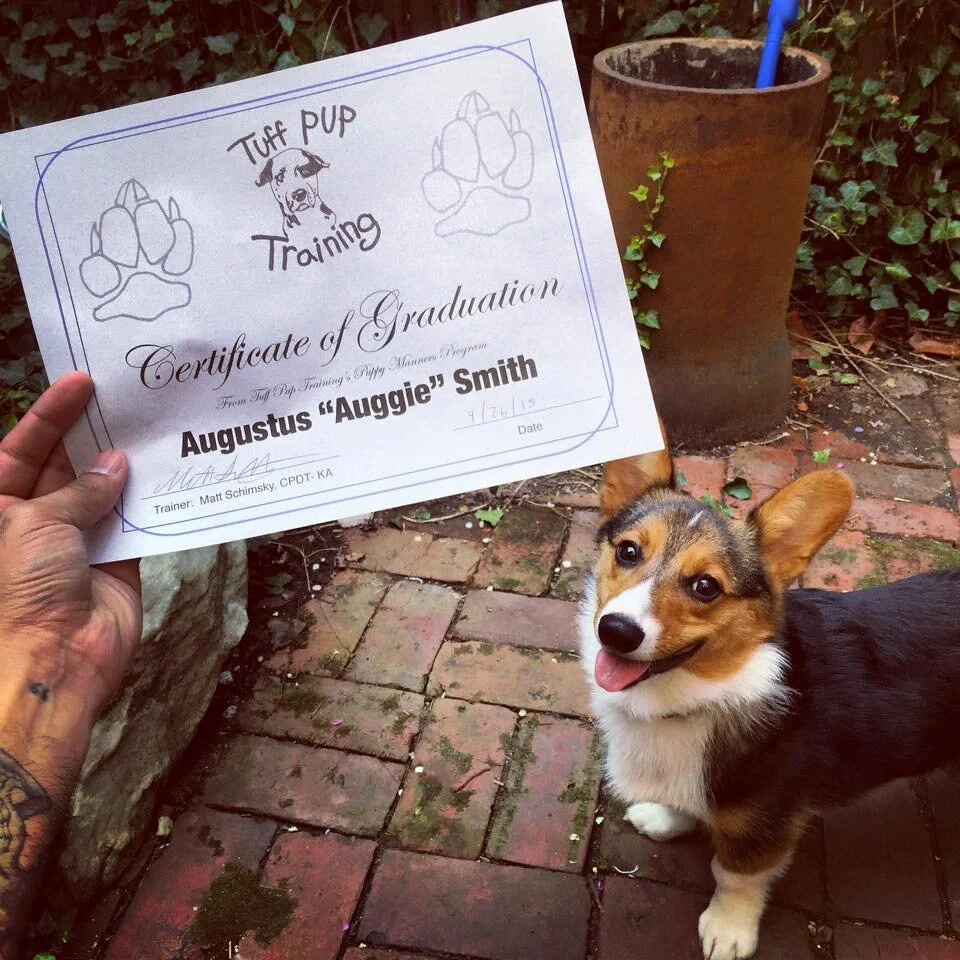
Graduation.jpg

Research is important, and for a lot of reasons.

Sometimes we research to really nail down what the world we’re exploring. The setting, the time, the characters, how certain things in your world work… it all depends on what you’re writing.

Take your time, and read up.

Even when your story is done, and it feels as polished as you can get it… remember to share your work.

With critique partners, beta readers, your writing group… it’s important to get eyes on whatever you’re working on, from someone who has a little distance from it.

Remember to share.

Share.jpg

As much as writing is important when it comes to crafting a good story, not writing is also key. You need to take a breather from time to time, and refill the creative well.

Don’t burn out. Take time to relax.

Sleeping.jpg

Remember.

They say most readers will walk away remembering the beginning and the end.

But if you do a really great job.

Screen Shot 2020-07-07 at 11.40.21 PM.png

They’ll remember all of it.

July 08, 2020 /Eric Smith
12 Comments
pitch.jpg

Perfect Pitch: Helen Corcoran's Query for Queen of Coin and Whispers

May 27, 2020 by Eric Smith

In the coming days, Helen Corcoran’s debut, Queen of Coin and Whispers, will be making its way onto bookshelves everywhere. A beautiful, sweeping fantasy novel packed full of political intrigue and slow burn romance, it’s a F/F YA fantasy that just captured my whole heart.

But, as wild as this might sound, it was initially a wildly reluctant pass.

I know, gasps all around. I’d love Helen’s book something terrible, but I wasn’t sure if I was the right agent to help edit it. The slow burn romance, the intense politics, I loved it all, but I wasn’t sure if I had the skill to help Helen touch it up. So I wished her lots of luck, made some agent recommendations (because we do that), and beat myself up over it for days.

A few months later, Helen circled back, with a potential deal offer in hand, and asked if I’d like to be on board to help her through it. She knew I’d loved the book. We’d talked before, there was another book she was working on that I was excited to check out. It made sense.

So, I joined Helen’s team. Signing with an agent during or after a deal happens a lot more than people think, and we should talk about that more!

Anyhow! There are a few things you can learn here in this query, particularly how to follow up on a pitch after a Twitter pitch event (Helen’s pitch was one I favorited during Beth Phelen’s excellent #DVpit event).

Let’s dig in, and please, if you find this helpful, be sure to get a copy of Helen’s stunning novel. It is something very special.

Dear Mr. Smith,

Kat Cho, my friend and CP, recently asked on my behalf if I could query you after both you and another colleague favourited my DVpit pitch ("Xania became the new royal spymaster to find her father's murderer. When she falls for her queen, choices must change": https://twitter.com/hcor/status/722427227170693121). Thank you for agreeing to consider it. THE QUEEN OF COIN AND WHISPERS is YA fantasy, complete at 99,000 words with LGBTQ+ characters.

Eighteen-year-old Lia won’t mourn her uncle. The idiot’s left her a bankrupt kingdom considered easy pickings by its neighbours. She’s sworn to be a better ruler, but loyalty is bought and lost with coin she doesn’t have. If she wants to push through her reforms, she needs to beat the Court at its own manipulation games.

Xania is biding her time. For years, she’s been building the skills to uncover her father's murderer. The change in power provides her with the perfect opportunity when Lia gives her a choice: become the new spymaster, with the full force of royal power to fuel her vengeance, or take a one way trip to the executioner’s axe. It’s an easy decision.

When Lia and Xania fall for each other, their love complicates Lia’s responsibility to marry for an heir, and threatens Xania’s precarious Court status. As they're drawn together amid a deluge of royal suitors and new diplomats, they uncover treason that could not only end Lia’s reign, but ruin their weakened country.

They’ve been driven by idealism and vengeance for years, but Lia discovers it's easier to rule through cruelty than kindness, and Xania must decide if she can accept the darker aspects of loving a Queen. They’re not only in danger of turning into people they despise: they must decide how much they’re willing to sacrifice for each other.

THE QUEEN OF COIN AND WHISPERS would appeal to readers who enjoyed the politics and intrigue of Marie Rutkoski's THE WINNER'S CURSE trilogy and Kristin Cashore's complex female characters. I'm a bookseller, with a focus on Children's and YA for over six years. Along with the Pikes Peak Writers Conference, I've previously attended the Backspace Writers Conference. As per your submission guidelines, I've attached the first fifty pages of the manuscript. Thank you for your time and consideration.

Kind regards,
Helen Corcoran

http://helencorcoran.com
Twitter: @hcor

-#-

So there’s a lot in this query to love, one of the many reasons I couldn’t wait to read it. And Helen does some specific things here that I get a lot of questions about. So! Let’s discuss.

Referrals: I’ve been closed to queries before, once due to having a baby, another time due to moving. So you know, major life events and all. But often times when I’m closed, I’ll still say I’ll look at referrals. If you’re friends with a writer or an industry person I’m pals with, I’ll take a look at something if they make a recommendation. Sure.

I can’t help but hammer this home though… only do this if you’re actually friends with that person? In my writer life, a lot of people I don’t know will often reach out for recs to MY agent, or will ask me for recs to other agents… and if I don’t know you and I’m not familiar with your work, I’m not going to do it.

Helen nails the referral here. Kat’s a writer I’m super familiar with. We’re friends. I listen to her podcast (which didn’t exist then, but you should subscribe to it now).

Following Up After an Event: Mixed into the query here, is Helen’s followup regarding DVpit, where I favorited her tweet. This kind of followup works whether it’s an online event OR an in-person pitch. Bring up where the agent will remember you from. Make sure you do it. Especially after a conference, when we are meeting like a hundred people in a weekend.

And now, the core part of the query letter, in the classic hook, book, cook, breakdown.

  • Hook: Right out the gate, Helen hits us with the word count, genre, category, title, and gives me a glimpse of the characters. "THE QUEEN OF COIN AND WHISPERS is YA fantasy, complete at 99,000 words with LGBTQ+ characters.” As an agent actively looking for inclusive YA, this opening hook nailed it.

    The comp-title section, which I generally like to see in those hooks, is dished at the end, which is also fine! And her comps are flawless. When you read this book, you’ll see.

  • Book: We get a nice four paragraph breakdown of the story, summed up in what feels like perfect jacket copy.

  • Cook: And boom, Helen talks about herself! Bookseller! Conferences she’s gone to! Perfection.

And there you go.

Be sure to order Helen’s book, wherever books are sold.

May 27, 2020 /Eric Smith
Comment
Screen Shot 2020-05-25 at 3.52.08 PM.png

Free Virtual Publishing Brain Pick at Harriett’s Bookshop!

May 25, 2020 by Eric Smith

If you’ve been following me on Twitter during all this (gestures outside), I’ve been doing a few virtual events to help raise money for my local indie bookstores. That, and to bring some attention their way during this time we’re all in together.

Harriett’s is a lovely bookshop located practically around the corner from my house, and just knowing Jeannine A. Cook is here in my neighborhood is a source of joy. They’ve had some really delightful social distance sidewalk sales during the pandemic, and being able to pick up a book has been a serious bit of self care. Thanks Jeannine!

On Wednesday, June 3rd, at 2PM, I’m hosting a virtual publishing brain pick with Harriett’s. Like just about every local event I do like this, it’s completely free, though I would love it if you would donate to the bookstore, even if it’s just $1. Or buy a book! Harriett’s is shipping!

During the stream, I’ll share the bookstore’s Venmo. If it’s easier, you can also donate to my Ko-Fi, and I’ll PayPal everything on over to Jeannine and the shop after.

You can register for the Zoom meeting here.

See you there! Remember, Wednesday, June 3rd, 2PM!

And in the meantime, be sure to shop at Harriett’s, online! Jeannine has AMAZING taste, and her expertly curated collection is * chef’s kiss * amazing.

May 25, 2020 /Eric Smith
Comment
Screen Shot 2020-05-21 at 10.17.32 AM.png

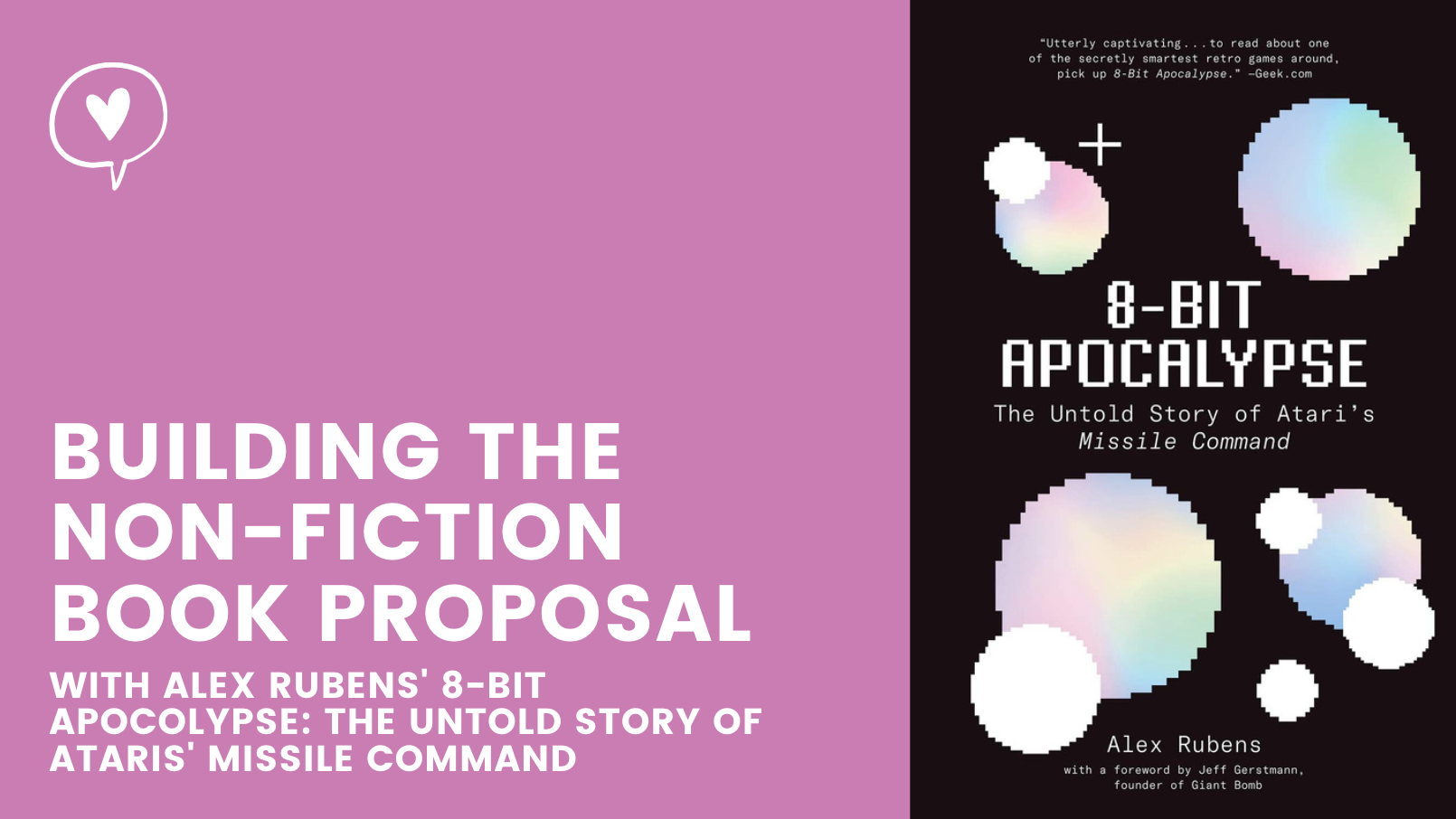
Crafting the Non-Fiction Book Proposal with Alex Rubens and 8-Bit Apocalypse

May 21, 2020 by Eric Smith

Hey there non-fiction writers!

So, I know working in this particular category can be tricky. Agents and editors ask for proposals but… what do those even LOOK like? And how do you know if one is going to work or not? What if you’re missing something? WHAT IF-

Okay, deep breaths. I’m here to help! And we’re going to use bits of an actual book proposal from a project that sold. This one worked, my friends.

Today, I’m dishing a breakdown of the proposal for Alex Rubens’ 8-Bit Apocalypse: The Untold Story of Atari’s Missile Command. This wonderful book came out in 2018 in hardcover with Overlook, and in beautiful paperback in 2019 with Abrams.

Now, this kind of post might seem familiar, and that’s because I’ve done this kind of deconstruction with Sam Slaughter’s wonderful Are You Afraid of the Dark Rum?, his 90’s cocktail book. I’ll be using the same sort of breakdown here, with Alex’s work, specific to a pop-culture history project. You know, as opposed to a cocktail book. Though the elements are the same.

First, a few quick disclaimers!

  • Remember how subjective this all is. What works for me as an agent, might not work for someone else. There are some great additional proposal guides written up by Jane Friedman, Brian Klems at Writer’s Digest, and Nathan Brandsford. Learn as much as you can.

  • Make sure you are reading agency guidelines before sending anything. An agent might want something ENTIRELY DIFFERENT. But I imagine a lot of what we are going to dig into here, such as author platform, proposed contents, sample pages, etc… will be across the board for everyone who requests a proposal.

  • And last, if this helps, please consider picking up a copy of 8-Bit Apocalypse. Alex put a lot of work into this wonderful book, and I’m so wildly proud of it. Support him if you can. It’s out in paperback!

Alright. Let’s dig in.

-#-

THE BASICS

When it comes to crafting a really great non-fiction book proposal, there are a few sections you should have in every single one. In my opinion, the breakdown should look a little something like this, and we’ll dig into each of these in a minute:

  • About the Book: Exactly what it sounds like. What’s the jacket copy look like?

  • Meet the Author: Let’s get to know you.

  • Author Publicity & Platform: It’s time to name drop. What’s your platform like, where do you write, who will support your book, what are your numbers? This could also just tie into the Meet the Author section (which in this case, it does).

  • Comparative Titles: What books would yours sit with in bookstores? What book would fans of your book, also potentially like?

  • Potential Media Relevance: Covering a topic that gets dug into in the media? Shows us a bit about that, if possible.

  • Manuscript Overview & Proposed Contents: What you’ve got so far, and where you see the work going. Word count? Well, that can vary greatly. We’ll dig into that too.

Now, when it comes to non-fiction proposals, there will sometimes be sections that are pretty specific to that kind of proposal. For example, with Sam Slaughter’s Are You Afraid of the Dark Rum, we had a whole section detailed to sample photography and recipes. That is, of course, specific to working on a cookbook. If you’re here for that, be sure to check that breakdown out here.

So, keep that in mind as we dig ahead. Your proposal might have to have a little extra, depending on what you’re doing.

Now, let’s break down these sections a bit more. I’ll include summaries of what we discussed in the proposal as well as some screenshots, which I hope will give you a helpful overview of what goes into one of these.

-#-

ABOUT THE BOOK

You know that query letter you’ve been polishing up? With your jacket-copy-esque writing that describes the book you’ve spent all these many months / years on? Well, this is yet another place to let that writing shine.

In Alex’s 8-Bit Apocalypse, he opened up the proposal with this harrowing introduction, discussing a game creator who had spiraled into nightmares after creating one of the most popular and influential video games of all time. Right out the gate, he talks about the era the game was made in, the main focus of the book, and even hints at the rise and fall of the game vs. the creator.

Screen Shot 2020-05-21 at 9.48.16 AM.png

It was this language that actually caught me with his query letter (which you can read here, and has a lot of that language!).

The ‘About the Book’ section for this proposal was only a single page, summing up the entirety of the story in the way you would on a book’s jacket copy. Alex explains the personal sacrifice of the game’s creator, the promise of some interesting behind-the-scenes storytelling, and a little blip about who the book is for (“readers who are hungry for books about pop culture, video games, and American history”).

So yes. Just a page. It’s your jacket copy, afterall. It wouldn’t be more than a page in your query letter, and it definitely wouldn’t be more than a page on the back of your favorite book.

-#-

ABOUT THE AUTHOR / PLATFORM

When it comes to non-fiction, you’re selling the author just as much as you’re selling the book, particularly in a category like this one, the pop-culture / history space. The author should be an expert on this topic, right? How do you prove it? How do you show it?

For Alex’s bio in this proposal, we had a page detailing the many places he’s written for as a video games journalist, and his specific beat as someone who covers the human element behind game creation.

Screen Shot 2020-05-21 at 11.56.48 AM.png

This is the place for you to show your expertise. Why you are THE person to write this particular book on whatever the topic might be.

This also falls into that “platform” discussion that gets brought up in non-fiction so often. It’s not always about having a massive social media following. It’s about how you’ve built yourself up in your field. In Alex’s case, it’s through publication and his work in video games. At the time, Alex had been working on narrative in Call of Duty, something else stressed in his about section.

So, someone who writes about video games AND helped make them? Perfect person to write a book like this. Make sure you show that in your proposals.

-#-

COMPARATIVE TITLES

Please don’t leave any comments saying your book is beyond compare. It ain’t.

When you’re thinking of comparative titles, consider what books might sit next to yours in bookstores. On readers shelves. It doesn’t have to be a list of books that entirely similar to it. Afterall, if there was already a comprehensive guide to the backstory of Missile Command, Alex wouldn’t have written this book.

Your book should stand apart, but have friends it can hangout with.

Screen Shot 2020-05-21 at 1.39.12 PM.png

In the case of Alex’s proposal, we dished comparative titles in that gaming space, some of which were publishing the year we were pitching it around (2016, the book came out in 2018, publishing takes forever), and others that showed that yes, video histories can be massive bestsellers.

We also shared some books that weren’t huge blockbusters, because it shouldn’t be all about the big titles. We talked about Super Mario by Jeff Ryan (a major favorite of mine) and Reality is Broken (which is an AMAZING book). Look those up.

-#-

POTENTIAL MEDIA RELEVANCE

When it came to this specific breakdown, we talked a little bit about the outlets that would potentially cover this, but we spent a bit more time on the AUDIENCE. Why? Because there are countless outlets that cover video game stories. So many. So while we listed some at the end of this one page section, it wasn’t necessary to hammer that home for editors and publishers. Because it’s absolutely a given they are going to know there are places that cover games.

Screen Shot 2020-05-21 at 10.39.01 AM.png

Also, I’m not sure if that Missile Command movie is still happening? That was a big thing being discussed back in 2016.

Anyhow. If the potential editor, agent, etc. isn’t aware there are outlets that cover video games… they aren’t the right person to be pitching this project to. Besides, we talked about the many outlets Alex writes for earlier in the proposal.

-#-

MANUSCRIPT OVERVIEW + PROPOSED CONTENTS

Here’s the big one, the question most people have when it comes to non-fiction.

How much of it do I have to write, and what should be there? Well, let’s talk about that.

Non-fiction does sell on proposal. It’s true! But that doesn’t mean it just sells on the idea. You have to show you can actually write the thing, in addition to having the expertise to back it up. I’ve heard contrasting thoughts on the exact count, but for me, at least 10,000 words works no matter the category you’re in.

Should you FINISH the whole book before pitching it? I’ve sold one memoir that was completely finished, so sure, you can. But you don’t necessarily have to.

In the case of Alex’s proposal, it ended up being a little over 10,000 words, and 40 pages long.

We had two key sections in this part of the proposal.

The Chapter by Chapter Synopsis: Alex had the entire book outlined for this project, and detailed what he’d be digging into in every chapter.

Screen Shot 2020-05-21 at 11.03.59 AM.png

The fact that we had a placeholder for “large industry personality” for the foreword is kind of hilarious, but hey, Alex ended up getting Jeff Gerstmann, the founder of Giant Bomb!

Effectively, this is the synopsis for the entire book. He broke down all eleven chapters to show the arc of the story of the game and the creator. This was about a dozen pages, so, lots of details so the editors would know where we were going.

The Sample Chapters: In the proposal, we include three finished proposed chapters for the book, demonstrating the approach Alex would be taking with the content, as well as his style.

Screen Shot 2020-05-21 at 11.11.45 AM.png

Want to read the actual chapters? They are good! Pick up the book please!

And there it is, the non-fiction book proposal breakdown for 8-Bit Apocalypse. I hope you found this helpful. At the end, when we were shopping this around, the proposal was a little over 40 pages total, but it’s perfectly okay for yours to be a bit longe.r

Maybe you have more platform information to dig into, or plan to really dive into the market / media potential for your book (we did that in a big with Sam’s cocktail book here). You do what you have to do, to get that story across, and you as the expert seen.

And like I said, If you find this helpful, consider ordering Alex’s book on Amazon, Barnes & Noble, or from your local indie bookseller.

And stay tuned! I hope to do more of these down the line.

May 21, 2020 /Eric Smith
Comment
Screen Shot 2020-04-16 at 9.54.23 AM.png

Book Deals: Fools In Love by Ashley Herring Blake and Rebecca Podos

April 21, 2020 by Eric Smith

Let it be known, I love anthologies.

Okay, you all know that already. Whatever.

What an absolute thrill it is to announce this wonderful anthology from two of my favorite YA authors, who I’m just so lucky to be working with on this special project.

Readers, get ready for FOOLS IN LOVE.

This delightful collection pulls together a bundle of acclaimed YA authors exploring beloved tropes in romance, with their own fresh takes. Second chance romances! Snowed in together! The grumpy one and the soft one! Fake dating! All of your favorites, written by a bunch of your favorites.

Here’s the blip from Publisher’s Marketplace:

Lambda Literary Award-winning author Rebecca Podos and Stonewall honoree Ashley Herring Blake’s FOOLS IN LOVE, a YA romance anthology offering up fresh takes on classic romance tropes in multiple genres, featuring Rebecca Barrow, Gloria Chao, Sara Farizan, Claire Kann, Hannah Moskowitz, Natasha Ngan, Lilliam Rivera, Laura Silverman, Amy Spalding, Rebecca Kim Wells, Julian Winters, and more to Britny Brooks at Running Press Kids, for publication in December 2021, by Eric Smith at P.S. Literary Agents (World).

Look at those contributors! And there are more coming your way, to be announced.

Congrats Ashley and Rebecca! Be sure to say hi to them on Twitter, to join in the revelry, and follow their editor, Britny Brooks.

This book is going to be so much fun.

April 21, 2020 /Eric Smith
Comment

Books Deals: Melody Schreiber's What We Didn't Expect Acquired by Melville House!

April 03, 2020 by Eric Smith

I’m so so wildly excited about this book.

By now, I feel like everyone in the book world knows how I feel about anthologies. I adore them. Whether they are fiction or non-fiction, they give readers the chance to explore a particular topic through the voices of many writers. And this topic? Premature birth? It’s such an important one.

I’ve known Melody for a while, and it was such a delight to see her proposal hit my inbox last year. And now, it’s a total honor to announce this book, and that it’ll be hitting bookstores everywhere later this fall.

Her debut collection, WHAT WE DIDN’T EXPECT: PERSONAL STORIES OF PREMATURE BIRTH, has been acquired by Melville House. Here’s the blip from Publisher’s Marketplace:

Journalist Melody Schreiber’s WHAT WE DIDN’T EXPECT: PERSONAL STORIES OF PREMATURE BIRTH, a collection of essays about the way premature birth shapes families and identities, from writers like Rep. Pramila Jayapal, Sarah DiGregorio, Tyrese Coleman, Anne Thériault, Kelsey Osgood, Dan Koboldt, and more, to Ryan Harrington at Melville House, for publication in Fall 2020, by Eric Smith at P.S. Literary (World).

That’s right, there are some amazing voices in this collection, and even more are going to be announced in the coming months, so make sure you’re following Melody on social media to hear more.

Congrats Melody, this book is going to mean a lot to so many people.

April 03, 2020 /Eric Smith
Comment
bridge.jpeg

A Guide to Helping Philadelphia Indie Bookstores

March 25, 2020 by Eric Smith

As we tuck ourselves away, hiding inside during this strange time, it’s impossible to avoid seeing the social media feeds billowing over with news about small businesses closing up shop, laying off staff, and just having a horrible go of things.

And while there are a few places labeled as essential businesses and staying open, like grocery stores and pharmacies and other life sustaining places… bookstores are shuttered. One could argue those are essential life sustaining businesses too, because books, hello. But I digress. 

I want our local booksellers to have a home to come back to, and to stay safe and healthy, so instead of a Twitter thread, here’s a roundup of some of my favorite local indies here in town, and how you can support them.


harrietts.jpg

Harriett’s Bookshop

My local indie here in Fishtown, Harriett’s opened just a month ago. Launched by Jeannine A. Cook, the shop has a beautifully curated collection of new books, and even a small shelf of used titles. It’s a stunning gem here in Fishtown and has already become a staple of mine. 

Jeannine has a few really lovely offers put together for folks buying up books during the quarantine, including free canvas totebags stuffed with goodies (while supplies last of course, be sure to tweet their way to see if they still have more), and a newly built online shop.

That expert eye of Jeannine’s has resulted in an online store that includes books by authors like N.K. Jemisin, Colson Whitehead, Morgan Jerkins, Celeste Ng, Emily St. John Mandel, and Philadelphia’s own Liz Moore and Kiley Reid… and tons more, of course. Miss browsing your local indie’s bookshelves? Enjoy this virtual one. 

They’re hosting an online discussion with Minista Jazz this week, with a deep dive into Octavia Butler’s Parable of the Sower, and if you register, the bookstore will send you a copy of the book.


Screen Shot 2020-03-25 at 3.23.10 PM.png

Uncle Bobbie’s

When I moved back to Philadelphia last year, the very first event I did back in my beloved home city, was a talk with Brittney Morris, whose book Slay is just a must-read in the world of YA. 

Right now the Germantown shop has a GoFundMe live, and according to the shop, “these donations will go towards providing financial relief to staff, paying our vendors, and paying our other bills.” 

They’ve also got IndieLite and Libro.fm accounts so you can shop for books and audiobooks online.

You can check out the GoFundMe here. They’re at a little over half their goal, so let’s keep it going.


anovelidea.jpg

A Novel Idea

Fun fact, the owners of this bookshop went to graduate school with me! Christina and Alex are an absolute joy, and I adore this South Philadelphia bookshop, located over on the bustling street of Passyunk. Right now that street isn’t as bustling as it used to be, so be sure to shop online and support this beloved new spot.

You can shop A Novel Idea on websites like IndieBound and Bookshop, and they’ve launched an online webstore that has their entire inventory. They sell new and used books, and also have some really lovely merch. T-shirts! Totes! Gift cards! If you can’t make up your mind what to pick up, get a gift card. Treat yourself later.

Head over to the order section of their website and click “current inventory” to see what they have in stock.

The shop just celebrated their one year anniversary. Let’s make sure they stick around.

And also, Christina’s collection of feminist fairy tales is out and about. Expect a release party at the bookshop when things cool off, but order one here!


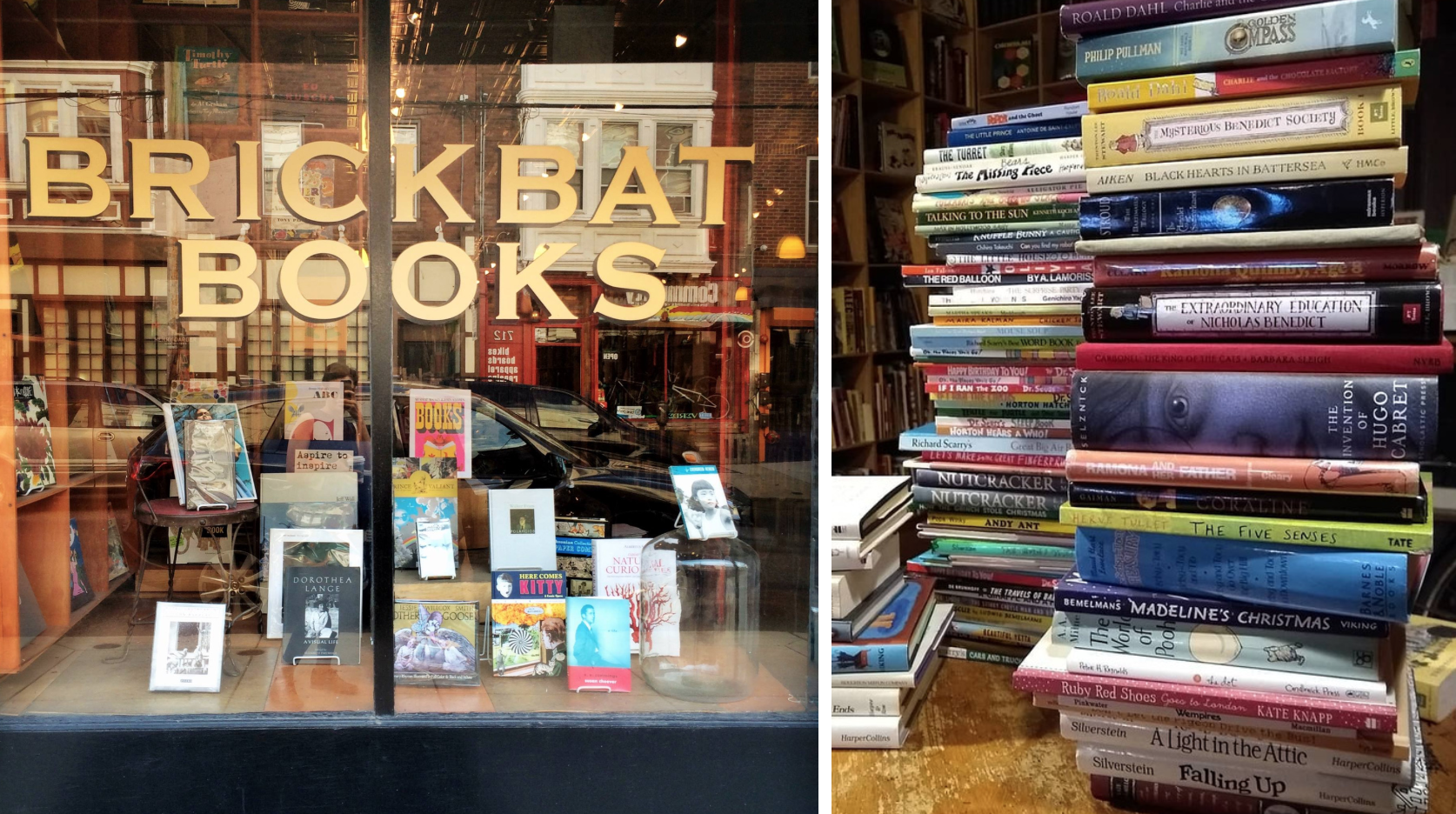
Brickbat Books

Located in Queen Village, this super charming little shop hosted plenty of memorable events that I adored, including a launch of a book by Doogie Horner. Their website on Blogspot doesn’t have much to dish, but if you follow them on Instagram, you can get information on books they’ve got available for shipping, or neighborhood pickup and delivery.

They’ve got a $4 flat shipping fee for all book orders, and you can email them for inquires. Details on their website.

And here’s their Instagram.


Screen Shot 2020-03-25 at 3.36.12 PM.png

Headhouse Books

When I did my little tour for Welcome Home, I had the most wonderful event in this bookshop, which you can find tucked away in Old City near… well, Headhouse Square.

They are currently offering free shipping on all orders over $35, sent via media mail. Details here on their website. It’s also worth noting that Headhouse offers up a monthly book subscription of curated titles. Learn more about that here, and maybe sign up!


Screen Shot 2020-03-25 at 3.40.31 PM.png

Giovanni’s Room

A historic landmark here in Philadelphia and one of the first queer bookstores in the country, Giovanni’s Room is an absolute favorite of mine, offering up a fantastic selection of used books and new titles… as well as odds and ends due to also being a thrift shop. Clothes and a new paperback? Boom. This is your stop.

I’ve raided their used bins more than I can count, and if you want to support them during this time, you can order a gift card from the bookshop. Details on that here, via their Twitter.

You can also order books from them online, via their website!


 People’s Books and Culture

The newly relaunched Penn Book Center is a place of total joy. I went here just a few weeks back, while Brandon Taylor (pictured above, taken while I was fanboying in my seat) was on tour, and goodness, it was amazing being in that new space.

While you can’t order from them at the moment, I’m making sure I shout them out, and that you head right here once things quiet down. This place absolutely deserves your support.


harrypotter window.jpg

Big Blue Marble

There are a lot of ways to support this lovely indie bookstore. In a recent newsletter they brought up shopping via Bookshop.org, which will let you buy books off them still, as well as Libro.fm… who are donating 100% of new memberships and gifts memberships to indie bookstores this month.

There are all kinds of delivery and curbside pickup options, which they dished in this newsletter. Click through, and see how you can help.


Screen Shot 2020-03-25 at 3.54.13 PM.png

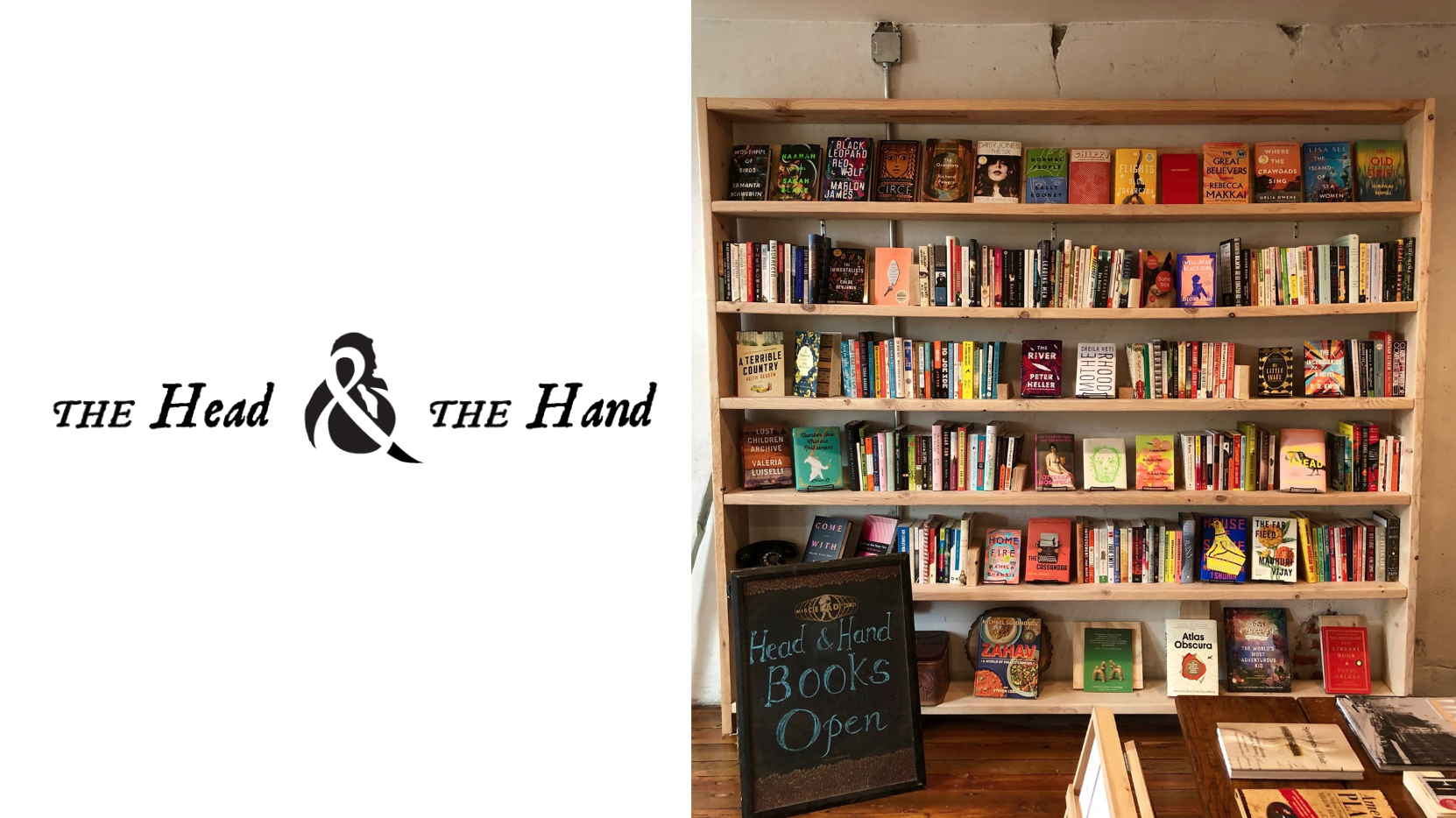
The Head & the Hand

An indie publisher slash indie bookstore slash vending machine chapbook machine, the folks at The Head & the Hand are a nonprofit who… well, they just do amazing things. I’m such a fan, and their pop up shop in Kensington is great.

Since they’re a press, you can absolutely support them by treating yourself to one of their many books.

You can also request direct orders from the shop, via their website and this form.


Brave New Worlds

My favorite comic book shop in Philadelphia, they are regularly updating people via informative (and also very charming) videos across social media. Be sure to follow along to find out what Brian, Rob, and the rest of their knowledgable staff have planned.


If you’re a bookseller following along, and your shop has plans, please email me and I’ll share! ericsmithrocks@gmail.com


March 25, 2020 /Eric Smith
Comment
  • Newer
  • Older

Powered by Squarespace